
With a proven record of delivering more than 160 products across industrial, digital, and hybrid domains over the past three decades, my portfolio highlights a curated selection of award-winning designs and transformative innovations.
These works have been featured at global conferences, trade shows, roadshows, and open house events, and as part of public thought leadership materials demonstrating a commitment to advancing human centered design and shaping industry standards.
Each example reflects my direct hands-on involvement from concept and design through execution, guided by a conviction to make technology human and a firm commitment to exceptional design, execution and delivery quality.
R&D World Summit 2025 | Boston, MA

Presented during the summit’s opening keynote, this concept research project introduced Human Scale AI as a transformative design paradigm for next-generation systems and applications.
It envisions an environment where intelligent and intuitive digital services seamlessly integrate with human needs, creating experiences that are adaptive, transparent, and deeply personalized.
Developed as part of my year-long journey in the MIT Chief Technology Officer program, this work reflects a commitment to shaping technology that amplifies human potential and redefines the boundaries of design innovation.
R&D World Summit 2023 | Boston, MA

This study explored the evolution of lightweight transportation design through Generative AI, leveraging rapid Test-Oriented Progressive Prototyping (TOPP) and the critical role of telemetry in self-optimizing closed loops that enable adaptive automation levels.
The original concept debuted at Barcelona’s automotive show in the early 1990s as a forward-looking collaboration with VIA Disseny and Derbi of the Piaggio Group early in my career. Thirty years later, I revisited this vision for my closing keynote at the World R&D Summit 2023, demonstrating what today’s technology ecosystem makes possible.
This retrospective and forward-looking exercise reinforced a timeless principle: in a world of perpetual motion, the enduring value of Human-Centered Design and Thinking by Doing remains paramount.
Design Thinking 2022 | Chicago, IL

This enterprise initiative introduced an interdisciplinary workstation and multi-modal user interface design for Blue Ocean’s Value Creation Center, the former project code name.
The project integrated Service Design, Business Modeling, and Analytics to support productization and go-to-market strategies. User research emphasized personalized, role-based views tailored to diverse stakeholders, complemented by a shared digital canvas enabling synchronous and asynchronous cross-functional collaboration and reporting.
Building on this foundation, the design environment combined different domains into a cohesive ecosystem. At its core, the Command & Control Tower was conceived to provide real-time visibility and adaptive control, empowering organizations to design, simulate, and optimize conventional and advanced digital services.
This initiative reflects a commitment to human-centered enterprise design, blending strategic modeling with operational agility to accelerate transformation in a hyper-connected world.
Design Thinking 2020 | VX Virtual Experience


These examples showcase enterprise applications integrating emerging AI/ML capabilities to enhance productivity and collaboration.
The top design focuses on Supply Chain Management and Industry 4.0, developed in partnership with Idean and Capgemini Invent, while the second explores Personal Knowledge and Productivity Management, created in collaboration with the Art Center College of Design and Illinois Tech interns.
Conceived at the Venture Design Studio, both initiatives intersect Human-Centered Design and Business Strategy as a source of disruptive innovation. Each application demonstrates how to make technology human by placing meaningful experiences at the front end of innovation, blending advanced analytics with intuitive, role-based interfaces for collaborative decision-making.
Digital Product By Design 2019 | Los Angeles, CA

This interactive infographic interface was designed for automated cloud computing operations within the Cloud Innovation Center.
The system exemplified predictive assessments, real-time monitoring, and informed decision-making through a highly visual and intuitive dashboard.
Presented to clients as “a chef’s open kitchen,” the concept conveyed transparency, operability, and trust—critical attributes for enterprise cloud solutions. Beyond its functional role, the design became a strategic “soft-sell asset,” leveraged in marketing roadshows and digital transformation programs to illustrate the art of the possible in cloud automation and network functions virtualization.
NOKIA VDS | Venture Design Studio Open House Day 2017 | Naperville, IL
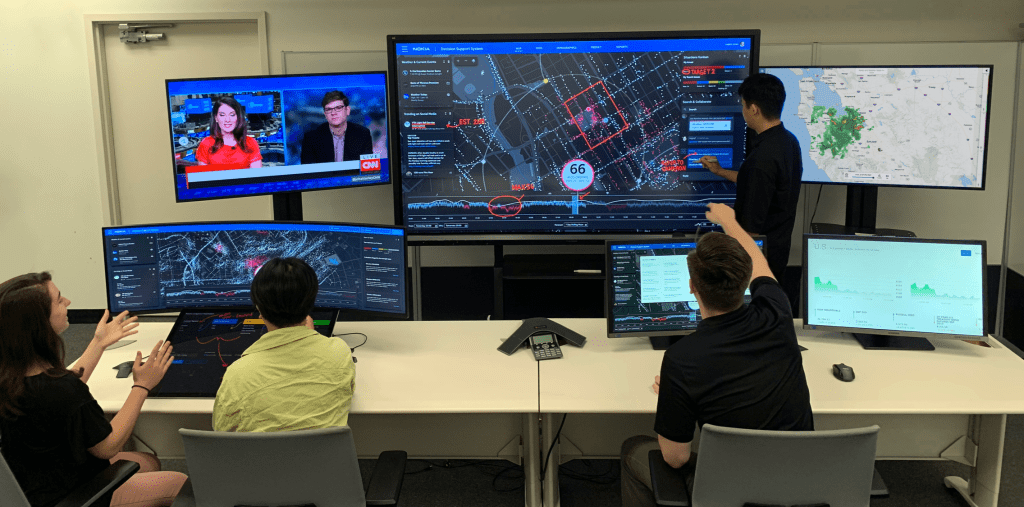
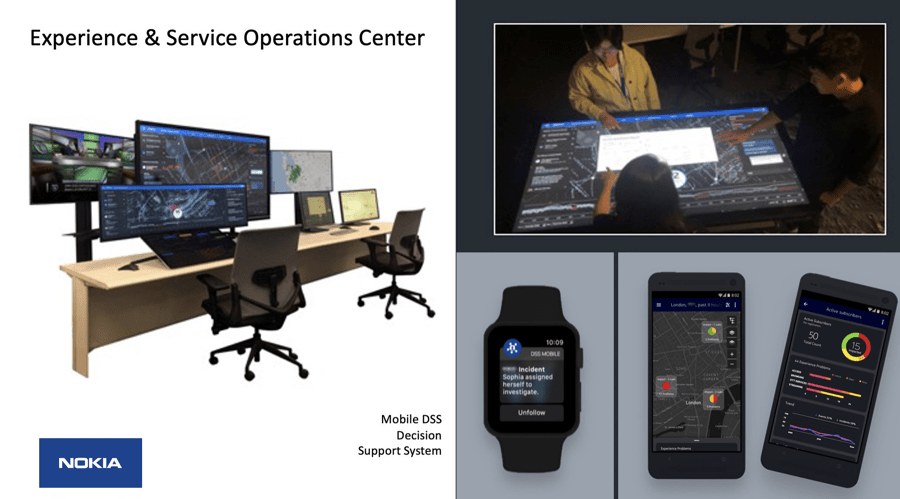

This experience-led product innovation redefined traditional Service Operation Centers (SOC) and Network Operations Centers (NOC) for Digital Service Providers in the Tech, Media, and Telecom (TMT) sector.
The Experience & Service Operations Center introduced a multi-screen, immersive environment designed to simplify complexity and elevate operational intelligence through real-time visualization, predictive analytics, collaborative workflows and seamless coordination across distributed teams at scale.
Showcased at premier industry events such as Mobile World Congress (MWC) and featured in global roadshows, this initiative demonstrated how experience-driven design can transform mission-critical environments into value based differentiators for digital service providers worldwide.
MWC | Mobile World Congress 2015–16 | Barcelona, Spain
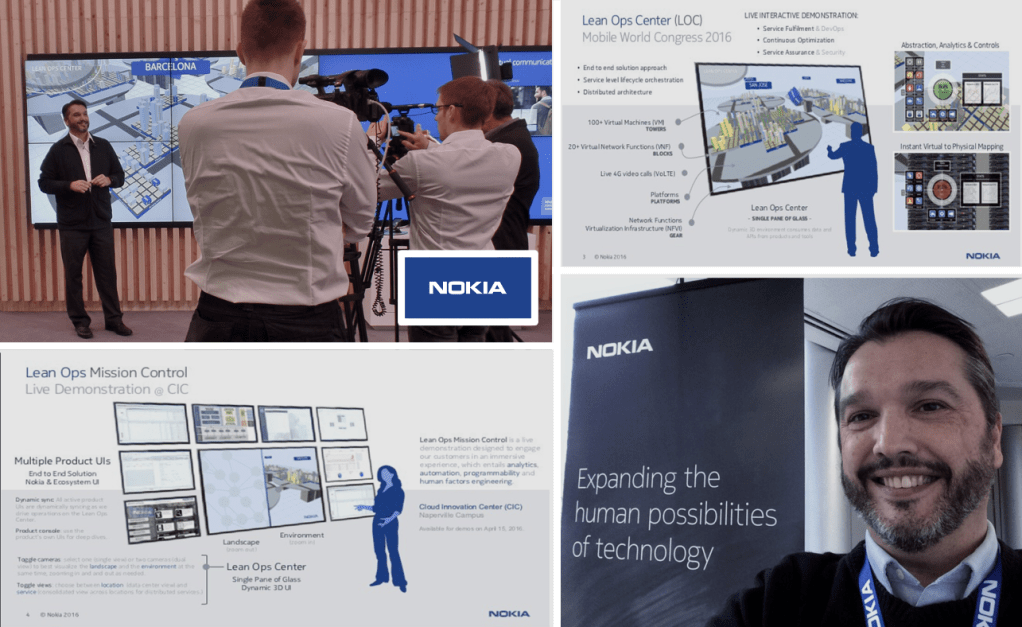

This project delivered the industry’s immersive Hybrid Twin System (HTS), integrating digital and physical environments to transform telecom operations.
The LeanOps user interface blended metaphorical, skeuomorphic, and real-world models to make abstract processes visually intuitive and actionable. Large-scale interactive walls and mission control dashboards enabled real-time orchestration of network functions, linking virtual simulations with physical data center elements.
This pioneering design enhanced situational awareness, sense making, what-if scenario exploration, accelerated decision-making, and demonstrated how to reimagine and reinvent an entire portfolio category.

The Radial User Interface (RUI) was crafted as a dynamic single-pane-of-glass designed to visualize and interact with infrastructure, applications, services, and transversal functions in a unified and fully orchestrated view.
Its hub-and-spoke information architecture provided end-to-end visibility, clarity, and control, enabling faster and more informed decision-making. By abstracting siloed subsystems and eliminating fragmented operational journeys, this design reduced risk and improved efficiency.
The radial model supported customization and scalability, empowering users to explore complex relationships and dependencies through a visually compelling interface.
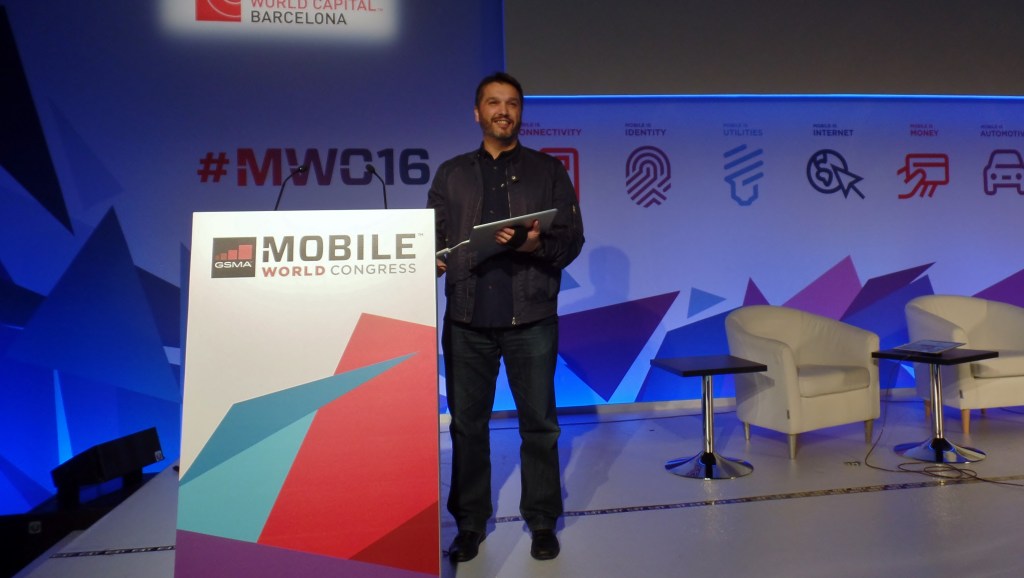
Proud to share that experience design innovation was a leading exponent of the LeanOps program, which was positioned as a core competency and a source of competitive differentiation.
By driving a design-first with an experience-led approach, the program elevated operational systems beyond functional tools into strategic assets. This emphasis on design transformed LeanOps into a benchmark for future-ready operational experiences and setting a new de-facto standard in the process.
CES | Consumer Electronics Show 2013 | Las Vegas, NV

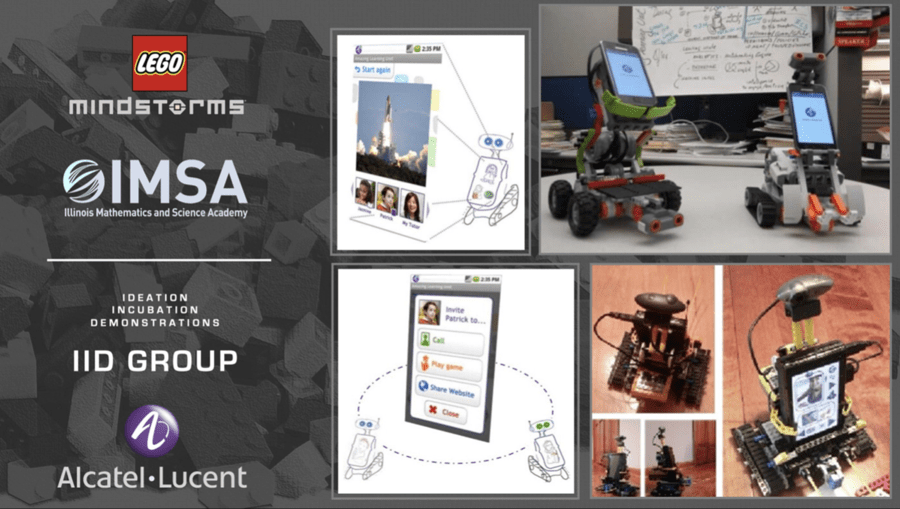
This project showcased a networked robotics demonstration system designed in collaboration with LEGO® Mindstorms and the Illinois Mathematics and Science Academy (IMSA).
The prototype integrated AI/ML capabilities with IP Multimedia Subsystem (IMS) to explore advanced telepresence and Industry 4.0 concepts. Featuring modular robotic platforms controlled through mobile interfaces, the system demonstrated real-time connectivity, remote interaction, and intelligent automation. This innovation served as a catalyst for subsequent client projects focused on smart manufacturing, collaborative robotics, and future workplace telepresence, positioning design as a driver of next-generation industrial solutions.
Beyond its technical achievements, the project also positioned STEM across arts and sciences. Interdisciplinary collaboration enabled incubation sessions and demonstrations that bridged academics with real-world enterprise applications, inspiring new value creation as a result.
Intel Investors Day 2014-15 | Santa Clara, CA

The goal was to create an intuitive user interface for the NFV Operations Center, capable of distilling sophisticated Software Defined Networking (SDN) technologies and Dynamic System Models (DSM) into actionable insights.
The design featured large form factor interactive displays and modular layouts that enabled real-time orchestration, monitoring, and optimization of virtualized network functions. Gamification principles were embedded into the design, leveraging the originality and game-like appeal of the UI to make complex workflows engaging and intuitive.
Interactive elements, visual feedback loops, and progressive disclosure techniques revealing need-to-know information transformed operational tasks into a more dynamic and rewarding experience, driving adoption and improving decision-making efficiency.
Intel embraced this approach as part of its Investor Day, Intel Developer Forum (IDF), and Carrier Cloud programs, positioning the interface as a reference model for NFV visualization and ALU as an innovation partner.
BIC | Business Innovation Conference 2009 | Wheaton, IL
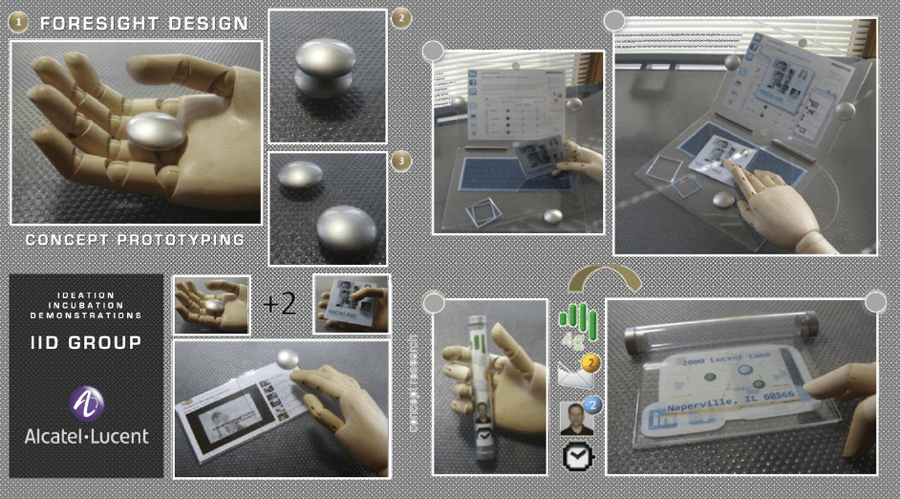
This forward-looking design research study explored button-sized smart wearable devices as an alternative to feature phones and the “dumb terminals” popularized in the early 2000s.
The poster’s experience mockup relies on new miniaturization posibilities and a thin-client architecture, offloading computation to intelligent network (IN) servers while enabling rich functionality through VoiceXML, IP-based multimedia services, and advanced wireless technologies such as Bluetooth, and then emerging 4G standards (UMB, WiMAX and LTE) as well as inductive charging.
The leading design principle was to decompose mobile phone technology down to its smallest viable form factor, creating an ultra-compact device that could deliver connectivity, communication, and smart services without the bulk of traditional hardware. This research anticipated trends in wearable computing, smart lenses, ambient intelligence, and network-centric design, positioning the concept as a precursor to modern AI devices.
Multiple buttons could be connected to augment capability—two or more units working together could deliver greater compute power, storage, and functionality than a single device alone, introducing a modular approach to personal technology. This project influenced early lab discussions on post-smartphone ecosystems, thin-client architectures, and network-driven intelligence, helping shape the vision for ubiquitous connectivity and miniaturized form factors.
CES | Consumer Electronics Show 2011 | Las Vegas, NV

This was developed in collaboration with Frog Design to explore and introduce consumer and enterprise use cases for context-aware multimedia services with the advent of 4G networks.
The 4G End-User Experience portfolio envisioned next-generation applications that were ahead of their time, including collaborative social media, live interactive streaming video, multi-party mobile payments, safety, and immersive AR/VR experiences. The design strategy explored diverse form factors from wearables and handheld devices to instrumented everyday objects, tabletop displays, and wall-sized projections by addressing ergonomics and usability across multiple contexts.
As a result of this initiative, an innovation ecosystem program was created to seek technology partners and productization opportunities, accelerating the transition from concept to market-ready solutions. This program fostered collaboration across industry and leading universities.
Be Brilliant Award 1991 | Scheveningen, The Netherlands

Co-sponsored by Honeywell Europe and General Electric Plastics, the design study explored how high-performance materials could make a bold design statement by unlocking new possibilities for compact electronics.
I created a sculpted, foldable lab system with fluid curves and a vibrant finish, engineered for durability, heat resistance, and tactile appeal in contrast to boxier, bulkier, and disjointed alternatives.
This project was a defining moment early in my career, showcasing how design innovation and material science converge. It became a key milestone in my transition from Europe to the United States in the mid nineties, a move that shaped the next chapter of my professional journey.
And this is just me, taking a coffee break before posting more projects.


Leave a comment